 All Ages
Weapons
Program
Master the Arsenal
Five traditional weapons systems — Bo, Nunchucks, Tonfa, Kama, and Sai — with structured progression through an alternating Group A / Group B pattern from White Belt through master-level certification.
The Problem
Most programs ignore weapons entirely.
Or treat them as an afterthought.
Weapons as an Upsell
Most schools charge extra for weapons classes, limit them to advanced students, or bolt on a single weapon as a novelty. Weapons training should be integral — not an add-on.
One Weapon, No System
Learning a single weapon in isolation misses the point. Each weapon teaches different principles — power, speed, precision, defense — and mastering them together builds a well-rounded martial artist.
No Progression Framework
Even when weapons are taught, they rarely follow a structured curriculum. Students learn random techniques without a clear path from beginner to mastery.
The BMA Weapons program was built as a complete system from day one — five traditional weapons with structured progression, alternating groups, and a clear path from White Belt basics through Post-Black Belt mastery.
Five Systems. Two Groups. One Arsenal.
What's Included
Weapons training begins at White Belt and advances in parallel with the empty-hand curriculum through an alternating Group A / Group B pattern.
Bo
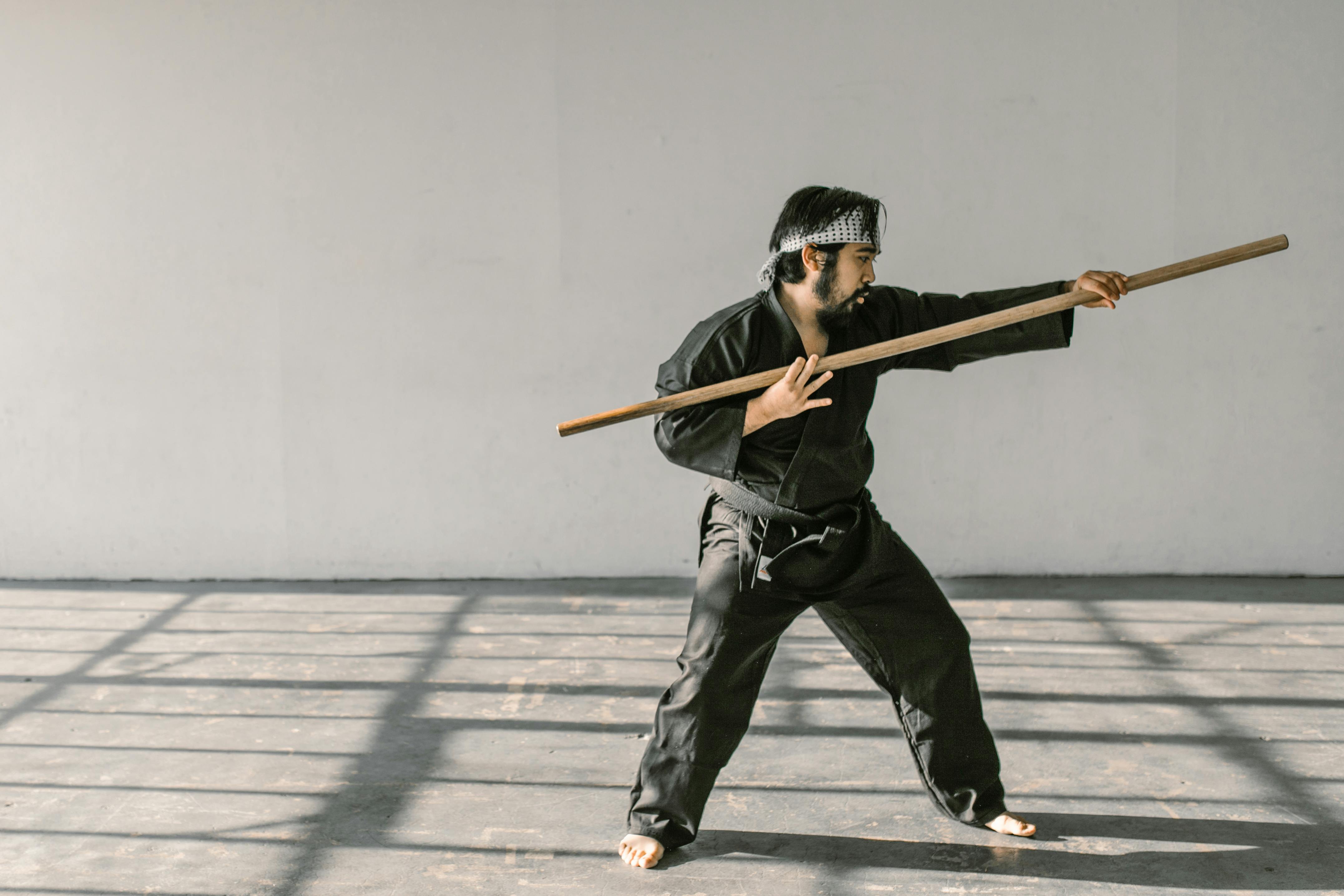
StaffThe foundation of all weapons. Blocks, strikes, thrusts, and figure-8 patterns — training power and range.
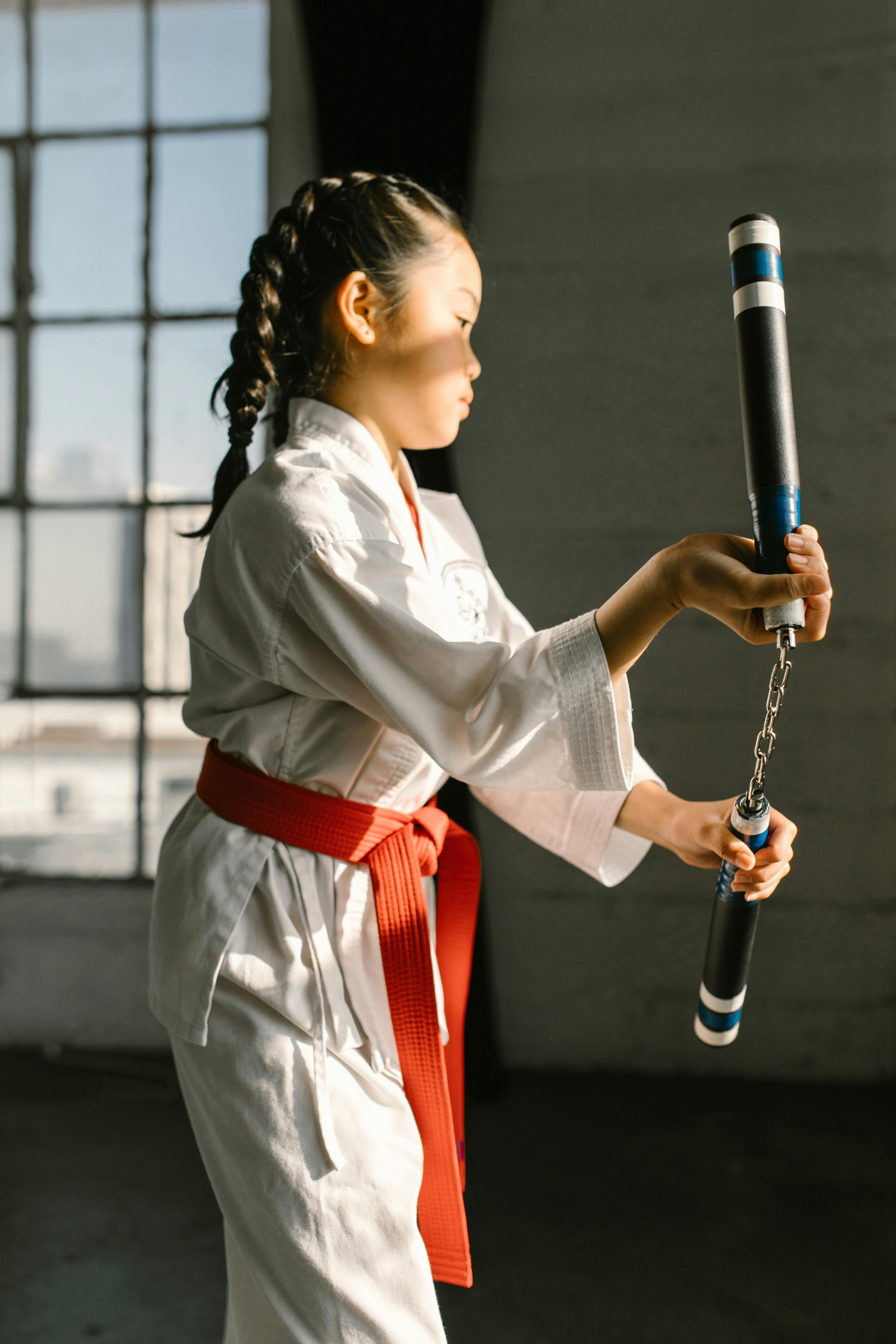
Nunchucks
NunchakuSpeed and precision. Temple strikes, snap attacks, behind-back transitions — training timing and fluidity.
Tonfa
Side-handle batonDefensive power. Chin strikes, blocks, extended hammer strikes — training control and close-quarters technique.
Kama
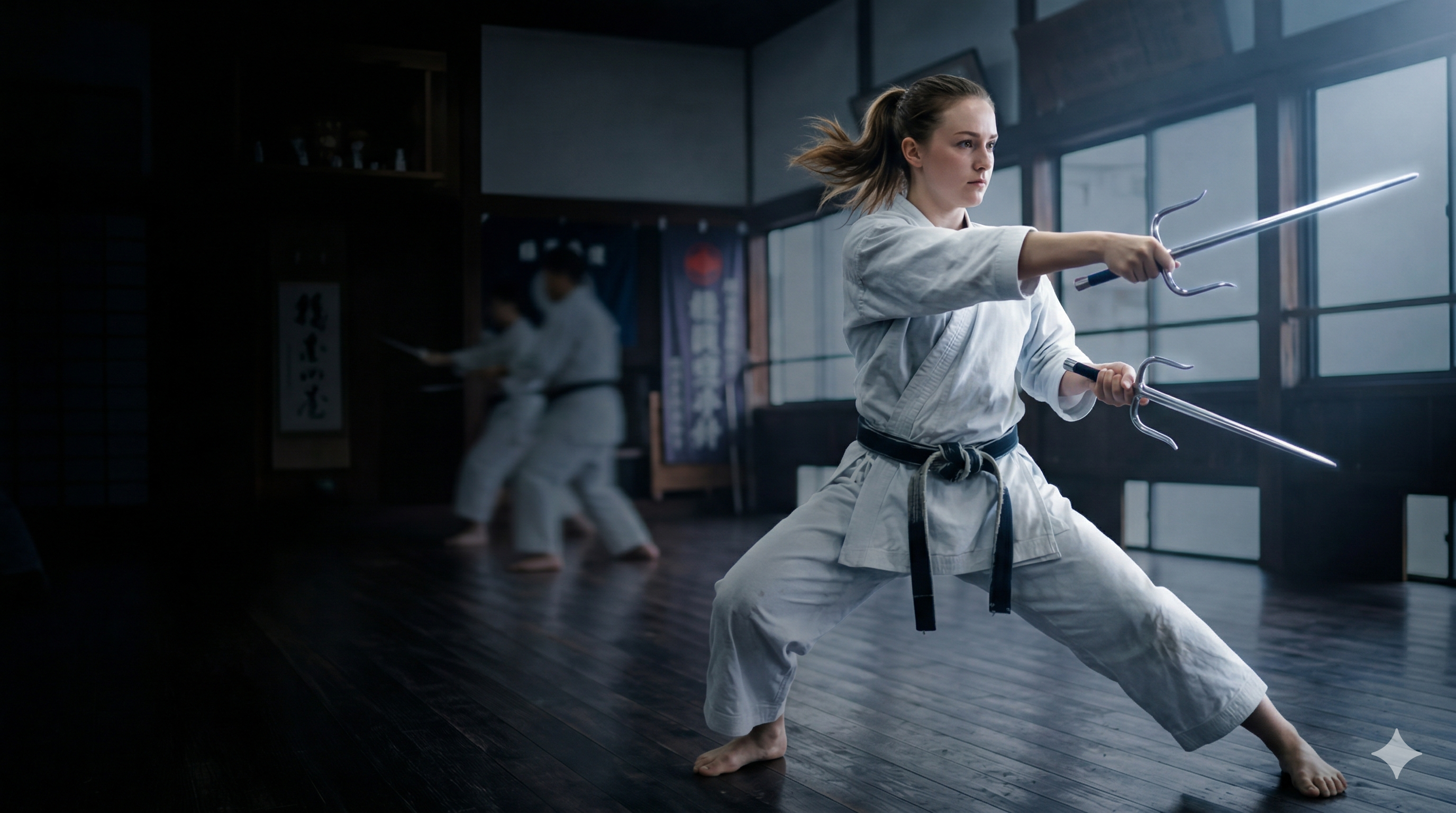
SickleDual-wielded hooks. Cutting, sweeping, and trapping techniques — training ambidextrous precision.
Sai
TridentOpen-close drills, trapping, and defensive formations — training patience and technical finesse.
Each weapon progresses through Basics, Universal Forms, Blackstone Forms, Self-Defense, and Combat — from White Belt through Post-Black Belt mastery.
Structured Progression
Five Categories of Mastery
Every weapon follows the same structured progression. Each belt level introduces new material across all five categories — building depth and versatility together.
Basics
Fundamental grips, stances, strikes, blocks, and transitions for each weapon
Universal Forms
Standardized kata shared across all BMA practitioners at every belt level
Blackstone Forms
Proprietary forms unique to the BMA system — combining traditional technique with modern application
Self-Defense
Practical weapon defense scenarios — disarms, counters, and situational awareness
Combat
Paired weapon sparring — controlled contact drills that build timing, distance, and reaction
Weapons instructor certifications are earned alongside empty-hand certifications: Universal Weapons Instructor at Orange Belt, Level 1 at Blue Belt, Level 2 at Brown Belt, and Master Weapons Instructor Post-Black Belt.
From Practitioners
Students Who Train the Arsenal
Thank you for the fast reply. I greatly appreciate what you are doing here! I cannot express how I have enjoyed reengaging in martial arts! I am hopeful to continue beyond what I learned the first time through! I was injured a few years back and lost a lot of physical fitness and strength. Because of this program, I will be more fit than I was before! Thank you again!
Membership
One Membership.
The Complete Arsenal.
Your subscription includes the full Weapons curriculum plus access to all BMA programs — Individual Martial Arts, Fitness, Youth Cadet, and more.
Annual
$20.83/mo equivalent — save $49.88
- Core empty-hand curriculum
- Universal & Traditional Weapons
- Cadet/Youth program access
- Fitness program access
- Belt progression tracking
- Community access
- Save $49.88 vs monthly
Monthly
Cancel anytime
- Core empty-hand curriculum
- Universal & Traditional Weapons
- Cadet/Youth program access
- Fitness program access
- Belt progression tracking
- Community access
- Cancel anytime
Instant access · Cancel anytime · All levels included
Common Questions
BMA teaches five traditional Okinawan weapons systems: Bo (staff), Nunchucks (nunchaku), Tonfa (side-handle baton), Kama (sickle), and Sai (trident). These are organized into Group A (Bo, Nunchucks, Tonfa — introduced at White Belt) and Group B (Kama, Sai — introduced at Yellow Belt).
You can begin studying the curriculum, forms, and techniques before purchasing any equipment. When you're ready, training weapons are available in our shop. Group A weapons (Bo, Nunchucks, Tonfa) are all you need to start — Group B weapons are introduced later in the curriculum.
Weapons alternate between Group A and Group B at each belt level. White Belt introduces Group A (Bo, Nunchucks, Tonfa), Yellow Belt introduces Group B (Kama, Sai), and from there each belt level alternates — ensuring you develop both groups in parallel throughout your progression.
All programs are included with every membership, so you have full access to both. While the weapons curriculum can be studied independently, many techniques build on stances, blocks, and body mechanics taught in the empty-hand program.
The Arsenal
Awaits
Five traditional weapons. Structured progression. From your first Bo strike through master-level certification — the complete weapons curriculum, nothing held back.